Homeschool Socialization: Why a Co-op Is the Real Answer
By Bryanna Buff · 2026-06-25
If you homeschool, you've heard "but what about socialization?" more times than you can count. Here's an honest answer, and why a co-op solves it.
"But what about socialization?"
If you homeschool, or if you've even floated the idea to a relative, you've heard this. Maybe so many times that your eye twitches a little when it comes up. It's the first question people ask, and it's usually asked with real concern, as if your kid is about to grow up in a closet with a math workbook for company.
So let's actually talk about it. Honestly, not defensively.
Homeschool socialization deserves a straight answer, because the worry underneath it is fair: kids need connection. They need to learn how to handle relationships, work with other people, navigate conflict, share space, make friends. No reasonable parent would argue otherwise. The real question was never whether homeschooled kids need social interaction. It's whether they get it. And for families plugged into a co-op, the answer is yes, often more of it and a healthier kind.
the socialization myth
The assumption buried in the question is that school is the main place, maybe the only place, where children learn to be social. That a kid who doesn't spend seven hours a day in a room with twenty-five same-age peers will miss some critical window.
But look at what socialization actually looks like in a typical classroom. Talking is discouraged for most of the day. The real social interaction gets squeezed into narrow windows, a twenty-minute recess, a lunch period, the few minutes between classes. And it's almost entirely with other kids the exact same age, inside a system run on institutional rules.
That's one model. It isn't the only one, and it isn't obviously the best one.
The kind of socialization that actually prepares kids for adult life involves people of different ages, in different settings, with different amounts of structure. Conversation. Collaboration. Mentorship. The self-directed kind of social navigation that happens when kids get some real say in who they spend time with and what they do. Homeschooled kids, especially ones in a co-op, tend to get a lot of that.
what socialization looks like in a homeschool co-op
A good co-op gives kids something a classroom usually can't: multi-age, community-based interaction in a place that's built around relationships instead of schedules. In practice it looks like this.
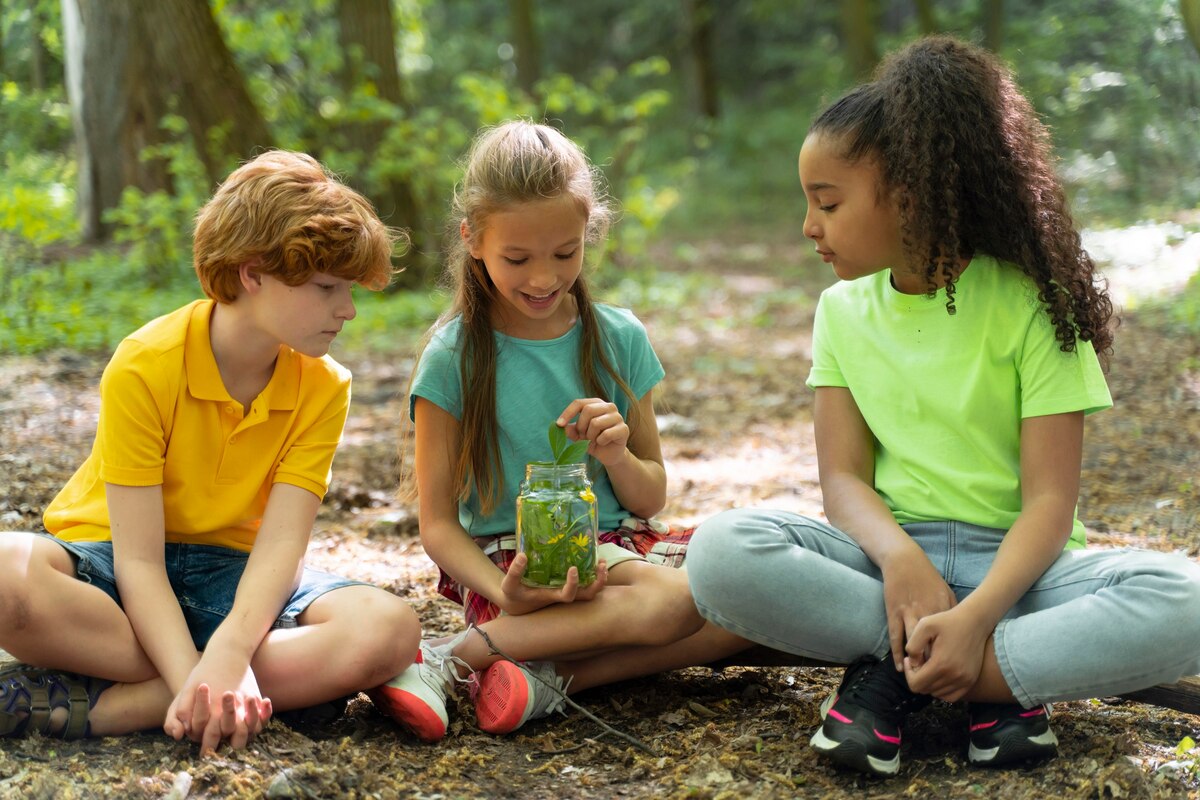
Multi-age friendships. A seven-year-old works alongside a ten-year-old on a project while a five-year-old watches and copies. The older kids pick up leadership and patience by helping the younger ones; the younger ones get pulled along by what they see the big kids doing. That's how social groups actually work in families, neighborhoods, and jobs, not the strict age-grading of a school.
Smaller groups. Most co-op classes run smaller than a public-school classroom. Every kid gets seen, every kid takes part, and it's harder for a child to quietly disappear in the back. Shy kids get more support. The outgoing ones learn to make room for everyone else.
Parents who know each other. In a co-op the grownups aren't strangers. They talk, they trade help, they build their own friendships alongside the kids. That creates a web of community that reaches past the children, and when the whole family has people, everyone does better.
Shared experiences. Co-ops tend to add things beyond class, field trips, performances, holiday gatherings, service projects, plain old meetups. Those shared days are where the real bonds and inside jokes come from.
Practice with actual social skills. Sharing materials on a group project, taking a turn leading a discussion, working through a disagreement with a friend, getting up in front of the group, this is the stuff that builds social skill, and co-op life serves it up constantly.
what the research generally finds
Here's where I want to be careful, because this topic attracts a lot of confident-sounding claims, and you deserve the honest version.
Researchers have looked at homeschooled kids and socialization for decades, and the general picture is reassuring. The studies I've seen tend to find that homeschooled children are, on the whole, socially well-adjusted, with self-esteem and social skills that hold up fine next to their conventionally schooled peers. What the body of research does not show is any consistent evidence that homeschooling, on its own, produces socially stunted kids. That old stereotype just isn't backed up.
I won't tell you every study says homeschoolers come out ahead, because the research is mixed and a lot depends on the family and the kid. What I'll say is what the evidence supports and what I watch happen every week: the way these kids socialize, in family, neighborhood, and co-op settings, is at least as effective as the classroom model, and for a lot of children it's a better fit. Part of that likely comes from the multi-age environments, the heavy family involvement, and simply spending less time inside the rougher peer dynamics, the bullying, the social pecking order, the constant pressure to conform, that show up in a lot of school settings.
None of that means a homeschooled kid is automatically better socialized. Socialization isn't automatic for anyone. It means the worry baked into the original question doesn't hold up, as long as the connection is actually there.
when socialization doesn't happen, and how to fix it
Let me be straight: not every homeschool family has a full social life. Isolation can be real, especially for families brand new to homeschooling, families out in rural areas, or anyone who hasn't found their people yet.
If you're genuinely worried, not because someone guilted you over dinner, but because your child seems lonely or you feel isolated yourself, here's what actually helps.
Join a co-op. This is the single most effective move. A good co-op is built-in, regular contact with other kids and families who share your values. Your child gets friends; you get a support network. That's the whole point of it.
Show up to park days and meetups. A lot of local homeschool groups run weekly park days, low-pressure, nobody's committing to anything. They're a great on-ramp if you're not ready for a full co-op yet.
Sign up for something. Sports leagues, art classes, music lessons, scouts, 4-H, theater. All of it puts your kid around peers, often mixed ages.
Volunteer together. A food bank, an animal shelter, a community garden. Service gives kids real-world social experience while teaching empathy and responsibility at the same time.
Get to know your neighbors. It sounds old-fashioned. It still works. Kids who know the people on their street and play with the neighborhood kids build social skills that are rooted in real life, not a curriculum.
the social advantage co-op kids get
Here's something that doesn't get said enough: for plenty of kids, a co-op is a better social environment than school was.
Kids who were bullied, left out, or just anxious at school often come alive in a co-op, because the dynamics are different. Smaller groups. Parents in the room. The multi-age mix. A culture that leans on community instead of competition. Children who struggled to find their footing in a classroom frequently find it here.
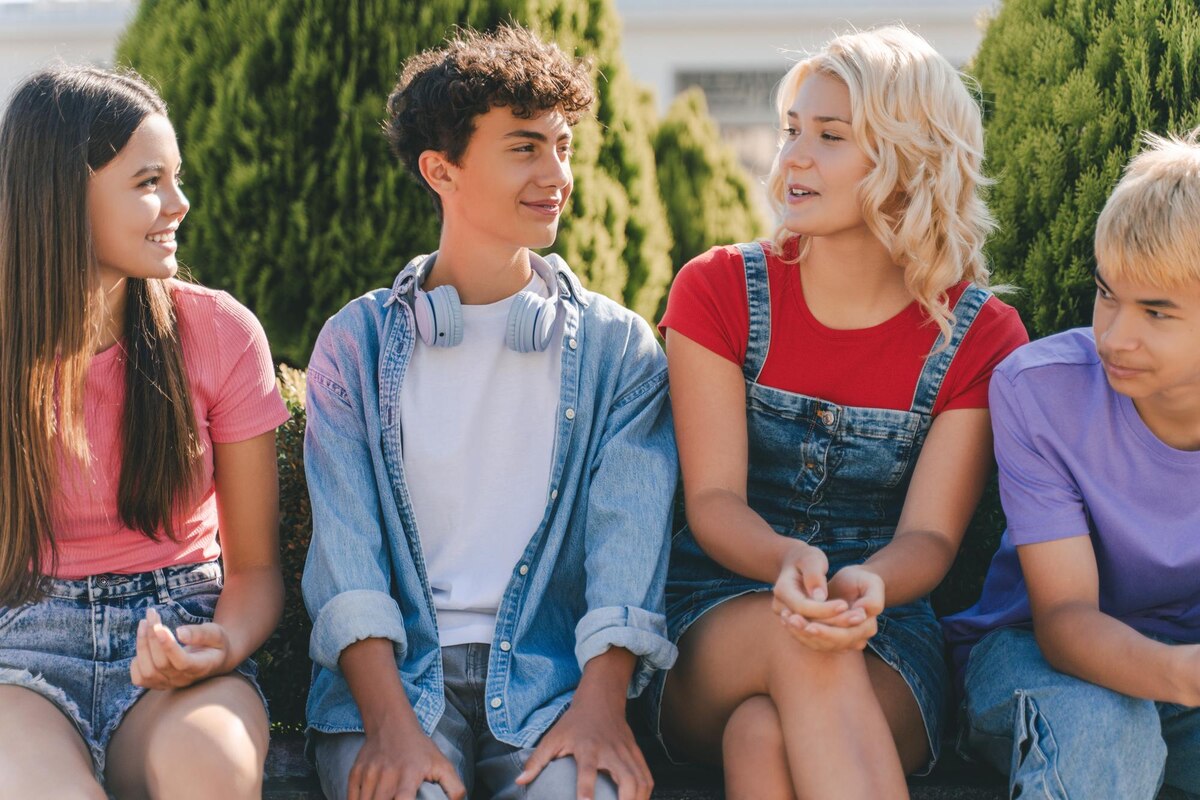
For teens it can matter even more. The co-op model gives them a social life that isn't run by cliques, group-chat drama, or the daily pressure to look and act like everyone else. Our Teen Meet Up for ages 13 to 17 exists for exactly this, a place where teens build real friendships and grow into who they are without all that noise. That kind of space is rarer than it should be.
how we build community at Ivory & Sage
At Ivory & Sage Homeschool here in Brooksville, community isn't an add-on. It's the thing the whole co-op is built around. Our programs are designed to connect families, not just teach lessons. In our History Quest classes kids collaborate on projects shoulder to shoulder. Our Teen Meet Up gives older kids their own community. Our Book Fair brings the wider family of co-op households together in one room. Belonging runs through all of it.
We serve families across Hernando County, Pasco County, Citrus County, and the greater Tampa Bay and Nature Coast region, ages one through seventeen. If socialization is something you care about, and you should, we'd be glad to show you what it looks like in a community that takes it seriously.
Come see how it works in person. Browse all our programs, or view enrollment options for semester and yearly spots. We're an approved Step Up for Students provider, so we're happy to walk through funding with you too.