Teaching the Middle Ages to Kids: Books, Activities, and Hands-On Projects
By Bryanna Buff · 2026-06-29
Knights, castles, catapults, and quill pens — here's how I teach the Middle Ages to my kids through stories and projects instead of worksheets.
If your kids are anything like mine, the Middle Ages sell themselves. Knights and castles are the easy hook, but it goes deeper than that. Building with your hands, making things from raw materials, codes of honor, long quests, daily life that looks nothing like ours — this is a period that begs to be taught through stories and projects instead of worksheets. That's exactly why teaching the Middle Ages to kids is one of my favorite units to plan each year.
Here's the short version, since you're probably skimming with a toddler on your hip: lead with living books, not textbooks. Build the projects medieval people actually did — castles, shields, illuminated letters, a pot of stew. Use those projects to start real conversations about how people lived. Below is the full plan, plus a sample week you can copy.
Start with living books, not textbooks
The fastest way to make the Middle Ages feel real is to put a good book in your child's hands. Not a textbook with one paragraph on feudalism and a row of comprehension questions, but a book that drops a kid into the medieval world and lets them live there through a character's eyes.
For my youngest (roughly ages 5 to 8), picture books carry most of the weight. Castle by David Macaulay is the one I reach for first. His drawings show what no paragraph can — the scale of the thing, the cleverness of the design, the sheer amount of human labor it took to raise a wall. My kids will sit and study a single cross-section page longer than they'll listen to me explain anything.
For elementary and middle grades (8 to 12), historical fiction is what makes the era stick. The Door in the Wall by Marguerite de Angeli, a Newbery winner set in 14th-century England, and Adam of the Road by Elizabeth Janet Gray both teach guild life, pilgrimage, and feudal obligation without any child noticing they're being taught. The history is just baked into the story.
If you've got a nonfiction kid, the "You Wouldn't Want to Be..." series has several medieval titles that are blunt, funny, and genuinely informative. Mine read them in one sitting and then narrate the gross parts at dinner.
Read aloud as a family when you can. Some of our best discussions happen mid-chapter, when somebody interrupts to ask, "Wait — they really did that?"

Hands-on projects that bring the era to life
The Middle Ages might be the easiest historical period to teach through projects, because so much of medieval life was about making things. Here are the ones that have earned a permanent spot in our rotation.
Build a castle. As simple or as ambitious as you want. Little ones use cardboard boxes, paper towel tubes, and tape. Older kids try clay, balsa wood, or sugar cubes. The learning happens when you ask why castles were built the way they were — the moat, the drawbridge, the arrow slits, the wall thickness. It's an engineering lesson wearing a craft-project costume.
Design a heraldic shield. Medieval families identified themselves through heraldry: symbols, colors, and patterns that stood for their values. Have your kids design a family shield and talk through what the choices meant — gold for generosity, blue for loyalty, a lion for courage. Then let them paint it on cardboard or poster board.
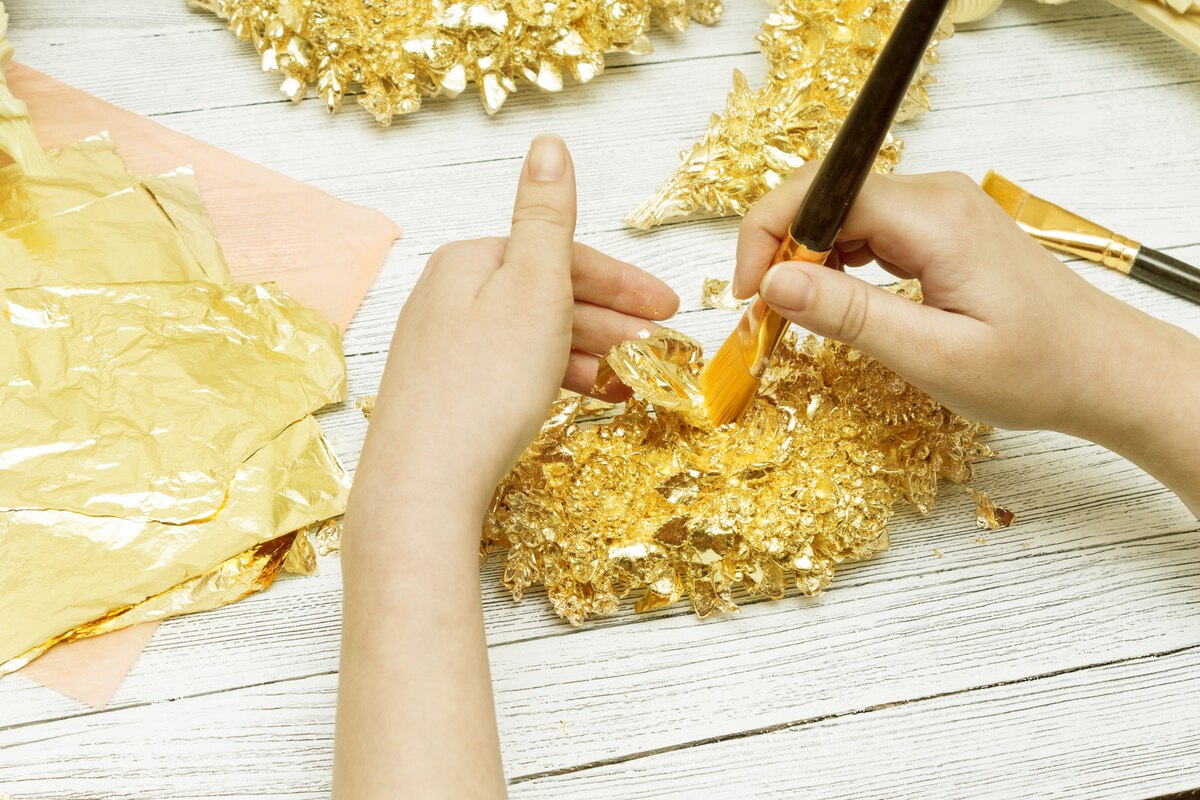
Make illuminated letters. Monks spent years on illuminated manuscripts, hand-lettering books with decorated initials in gold and color. Give each kid a big letter template to fill with vines, animals, patterns, and paint. It folds art, literacy, and history into one project.
Try medieval cooking. Nothing roots a time period in a child's memory like taste. Peasants ate simple food: bread, pottage (a thick vegetable stew), cheese, whatever was in season. A basic pottage is cheap and forgiving — simmer root vegetables, beans, barley, and herbs in broth. Nobles ate more elaborately, with roasted meats, spiced sauces, and baked fruit. Let the meal turn into a conversation about class, farming, and daily life.
Write with a quill. Cut a feather into a pen, or buy a cheap calligraphy nib, and let kids write with ink the way scribes did. The dripping and blotting and slow pace give them a gut-level sense of how hard writing was before the printing press.
Build a catapult or trebuchet. This is the one that hooks the reluctant learners. A simple trebuchet comes together from craft sticks, rubber bands, and a plastic spoon; a fancier one uses a wooden frame and a counterweight. Launch marshmallows, then talk about how siege weapons actually worked and why castle designers kept reinventing their defenses.
Turn the projects into deeper learning
The projects are fun on their own. They become an education when you use them as a springboard.
While you're building a castle, ask: Who lived in castles, and who didn't? What was daily life like for a peasant versus a lord? Why were castles built where they were?
While you're painting shields, ask: What did family identity mean in medieval society? How did the feudal system actually work? What did loyalty and honor look like day to day?
While you're cooking, ask: Where did the ingredients come from? How did the seasons shape what people ate? Why did a peasant's plate and a noble's plate look so different?
None of this has to be formal. The best of these conversations tend to happen while everyone's hands are busy and nobody feels like they're being quizzed.
A sample one-week Middle Ages unit
If you want a starting structure, here's a simple week that mixes reading, projects, and discussion. Bend it to fit your family.
Day 1 — The world of the Middle Ages. Read aloud an introduction to the era. Talk through the timeline: when was it, what came before, what came after? Start a timeline wall or a notebook page.
Day 2 — Castle life. Read about castles (Castle by Macaulay is perfect here). Start the castle-building project. Discuss design and defense.
Day 3 — Knights, heraldry, and chivalry. Read about knighthood and heraldry. Make the shields. Talk about what honor and chivalry meant and how those ideas shaped society.
Day 4 — Daily life and food. Read about ordinary people's lives. Cook a simple medieval meal together. Talk about class, farming, and the seasons.
Day 5 — Monks, manuscripts, and learning. Read about monasteries as centers of literacy. Make illuminated letters. Discuss how knowledge was preserved, and what that says about how we think about education today.
Stretch it over two weeks if you'd rather, add a field trip to a local historic site, or follow whatever rabbit hole your child digs.
Why the Middle Ages is worth teaching
Past the obvious appeal of castles and knights, the Middle Ages teaches kids to think about systems, power, culture, and change. It's the bridge between the ancient world and the modern one, and the questions it raises — justice, loyalty, faith, innovation, inequality — show up in every era after it.
It's also one of the most naturally interdisciplinary subjects you can study. A single unit covers history, literature, art, engineering, agriculture, writing, geography, and cooking, and none of it feels forced. For families who learn by making, building, and storytelling, that's a gift.
Studying the Middle Ages with us on the Nature Coast
At Ivory & Sage Homeschool in Brooksville, Florida, our History Quest: The Middle Ages program takes kids ages 5 through 12 on a semester-long dive into the medieval world using exactly this hands-on, living-history approach. We build, we cook, we read good books together, and we talk about what it all meant. Families come from across Hernando, Pasco, and Citrus counties and the greater Tampa Bay area, and yes — we're an approved Step Up for Students provider, so scholarship funds can go toward tuition.
If your family loves learning through making, building, cooking, and storytelling, come see if it's a fit.