Women in History Homeschool: Stories That Change How Teens See the Past
By Bryanna Buff · 2026-07-02
Most curricula tuck women into the margins. Here are five worth a full week each, plus how I teach women's history to teens in our Florida homeschool co-op.
Open most standard history curriculum and you'll notice the same pattern. Wars led by men. Governments built by men. Discoveries credited to men. Women show up now and then in the margins, usually as someone's wife or someone's mother, and then the narrative moves on.
It isn't that women weren't doing remarkable things. They were, in every era and on every continent. The record just wasn't built to keep track of them. A women in history homeschool study is how I started filling that gap with my own teen, and it changed the way she reads everything else.
Here's the short version if you only have a minute: studying women's history with teens isn't about checking a box for Women's History Month. It's about giving them a more honest picture of how the world actually got made. And for a lot of teens, girls especially but not only girls, meeting women who pushed past the limits of their time lands hard, in a good way.
Why women's history belongs in a homeschool
Homeschooling hands you one thing a packed classroom usually can't: time to tell the whole story.
In a standard classroom the curriculum is already set. There's a textbook, a pacing guide, and a test at the end that decides what gets covered. Women's contributions get squeezed into a sidebar or a single unit, and the class keeps marching.
At home you can stop and dig. You can spend a full week on Hypatia of Alexandria, a mathematician and astronomer in a world that wanted women nowhere near either. You can read Abigail Adams's actual letters instead of a paragraph summarizing them. You can study the Agojie, the women warriors of the Kingdom of Dahomey, and set their training next to the European armies of the same era.
You can do all of that because nobody is timing you. And when you do, history stops being a list of great men and turns into something messier and far more interesting, which is to say, closer to the truth.

Five women worth a full week each
These are a few stories that deserve more room than a textbook gives them. Any one of them could anchor a week of reading, discussion, and hands-on work. I've kept the numbers honest where the historical record is fuzzy, because teens notice when you overstate things, and because the truth is impressive enough.
### Hildegard of Bingen (1098–1179)
A medieval nun who was also a composer, writer, philosopher, and naturalist, with a range of work that's almost hard to believe. Hildegard wrote music still performed today, produced theological and scientific texts, put together a system of herbal medicine, and traded letters with popes and kings, all in a world that expected women to stay quiet. Her life opens up real conversations about creativity, faith, institutional power, and what it costs to live by your own convictions.
### Artemisia Gentileschi (1593–1656)
One of the most gifted painters of the Baroque period. Artemisia survived personal trauma and professional shutout to become one of the first women admitted to the Accademia delle Arti del Disegno in Florence. Her paintings are dramatic and forceful, often built around strong women from mythology and scripture, and they're now treated as masterworks. Reading her biography alongside her canvases raises good questions about resilience, artistic voice, and whose work history decides to remember.
### Mary Anning (1799–1847)
A self-taught fossil hunter from a working-class family on the English coast. Mary Anning made some of the most important paleontological finds of the 19th century, including the first correctly identified ichthyosaur skeleton. The scientific establishment of her day mostly kept her at arm's length, both for being a woman and for being poor. Her story is a strong way into talking about class, gender, and who gets to count as an expert.
### Ching Shih (1775–1844)
A former captive who rose to command one of the largest pirate fleets in history, by most accounts hundreds of ships and tens of thousands of sailors across the South China Sea. (The often-quoted figures of 1,800 ships and 80,000 sailors are estimates, so I frame them as "roughly" and let teens weigh the sources.) Ching Shih wrote a code of laws for her fleet, held off the Chinese, Portuguese, and British navies, and negotiated a retirement that let her keep her wealth. Her life upends nearly every assumption teens bring about gender, power, and leadership in that era.
### Irena Sendler (1910–2008)
A Polish social worker who helped smuggle approximately 2,500 Jewish children out of the Warsaw Ghetto during World War II. She was captured, tortured, and sentenced to death, then rescued by the Polish underground. She kept the names of the children she saved on slips of paper hidden in jars buried under a tree, hoping to reunite them with their families after the war. It's one of the clearest examples of moral courage in modern history, and teens feel the weight of it.
How to actually teach this to teens
Teens do best with history that treats them as thinkers, not as buckets to pour facts into. A few approaches that work in our home and in our co-op:
Go to the primary sources. Whenever you can, read the original. Their letters, their diaries, their published work. Teens can handle complexity, and a primary source lets them form an interpretation instead of swallowing someone else's.
Talk more than you lecture. Lay out the story, give the context, then open it up. What would you have done in her place? Was she right? What does her life tell you about the society around her? Where do you see echoes of it now?
Let them respond creatively. Have them write a letter in one of these women's voices, make a piece of art tied to her story, design a personal emblem for her values, or write a song or monologue. Creative work cements understanding in a way note-taking can't reach.
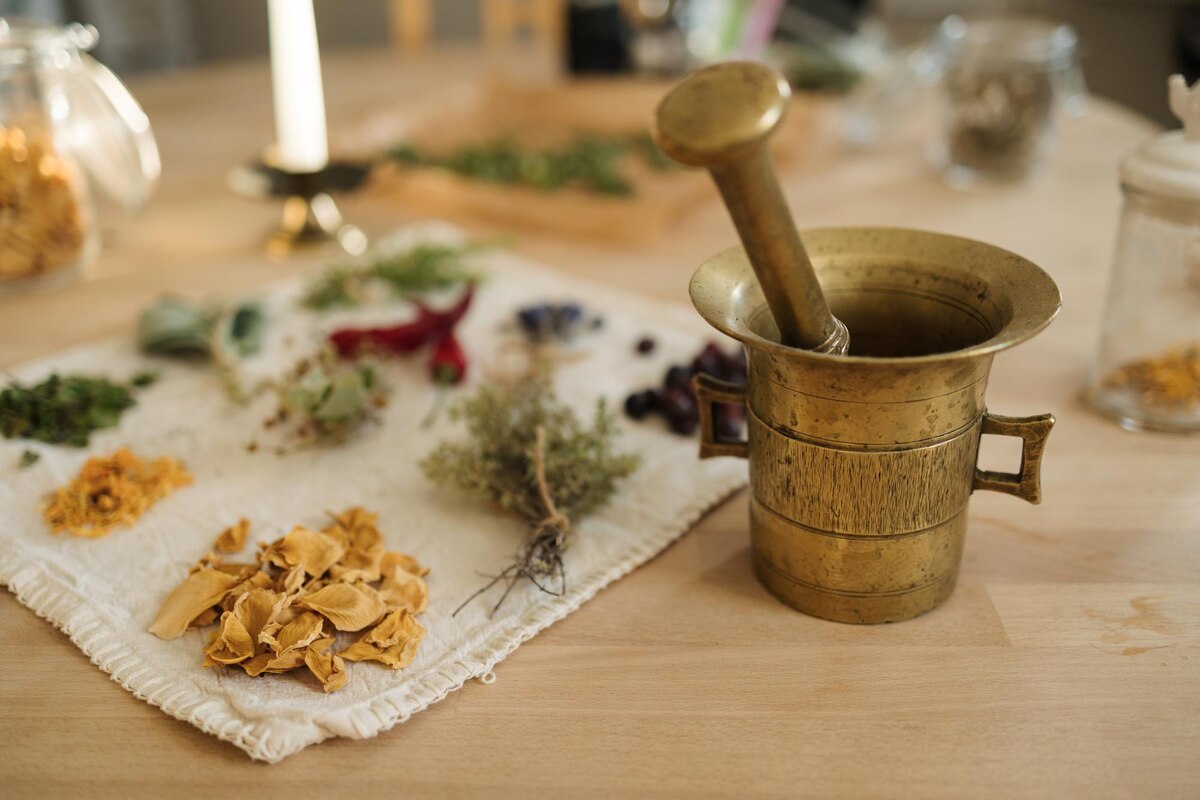
Make something with their hands. Most of these women were makers themselves. Study Hildegard's herbal medicine and mix a simple remedy. Look at Artemisia's technique and try it. Read Mary Anning's fossil sketches and go hunting for fossils yourself.
Compare and contrast. Set each woman's life next to the standard story of her era. How does Hildegard square with what we usually learn about the medieval church? How does Ching Shih change what teens think they know about 19th-century China? This doesn't erase the familiar narrative. It fills it out.
Building a unit you can teach in a semester
If you want to put this together for your family or a co-op, here's a simple frame that's held up for me.
Pick four to six women from different eras and parts of the world. Variety keeps teens engaged and stretches their sense of where history happened. Reach beyond Europe and North America on purpose, because the story is global.
Give each woman a week. Read about her life, set up her context, dig into a primary source or something she created, and add one hands-on project or creative response.
Finish with something they build. A gallery of illustrated portraits with written biographies. A podcast episode profiling one woman. A short collection of creative writing. A presentation they give to the younger kids. The synthesis is where the learning locks in.
Legacy of Her at Ivory & Sage
At Ivory & Sage Homeschool in Brooksville, Florida, our Legacy of Her: Women Who Inspire program for teens ages 12 to 17 does exactly this. We walk through the lives of women who shaped history with stories, discussion, art, and hands-on creative work. It's history seen through women who led, created, and refused to stay in the margins.
It's also a place for teens, girls and boys both, to wrestle with questions that hit hard in adolescence. What does strength actually look like? Who gets to decide the story? What kind of legacy do I want to leave? We serve homeschool families across Hernando, Pasco, and Citrus counties and the wider Nature Coast and Tampa Bay area, and we're an approved Step Up for Students provider, so we're glad to talk funding too. If you want to read the rules side of homeschooling here first, the Florida Department of Education's home education page is the place to start.
If your teen is hungry for history that goes deeper than the textbook, we'd love to have them join us. You can also browse all our programs to see how Legacy of Her fits alongside the rest.
Explore Legacy of Her: Women Who Inspire.